Belsen
Surprised by JoyBelsen is the small Hertfordshire town and boarding-school setting of a difficult period in C. S. Lewis’s childhood, from 1908 to 1910. Remembered first as flat, flinty, and exposed to weather he had never known, it later acquired a less hostile character through the companionship of the remaining boarders. The place thus holds two contrasting meanings in his account: a school marked by deprivation and control, and a landscape in which friendship, curiosity, and shared jokes could take root.
Setting and First Impressions
Belsen stood in Hertfordshire, far from the Irish landscape of County Down where Lewis had grown up. He initially saw the county as flat and yellow-soiled rather than green. Its climate also seemed startlingly different: he encountered bitter frost, stinging fog, oppressive heat, and thunderstorms on a scale new to him. Through the dormitory’s curtainless windows, he came to know the full moon’s “ghastly beauty,” an image that makes the setting both physically severe and imaginatively vivid.
The school itself was small, with about eight or nine boarders and roughly the same number of day boys when Lewis first knew it. Its organized games were already in decline: rounders in the flinty playground was the exception, and games were abandoned not long after his arrival. Bathing meant a weekly turn in the bathroom. Lewis continued doing Latin exercises throughout his stay, from 1908 until he left in 1910, without reaching a Roman author. The school’s one schoolroom had a green iron chimney piece, where a few well-used canes supplied what he described as the teaching’s only stimulating element.
The School and Its Decline
Belsen’s teaching staff consisted of the headmaster and proprietor, known as Oldie, Oldie’s grown-up son Wee Wee, and an usher. Ushers came and went rapidly; one remained for less than a week. Lewis’s recollection places the school in a state of institutional decline rather than presenting it as a stable educational community. Eventually there were no ushers, and Oldie’s youngest daughter taught the junior pupils. By then only five boarders remained. Oldie gave up the school, and Lewis, one of its last pupils, left as it closed.
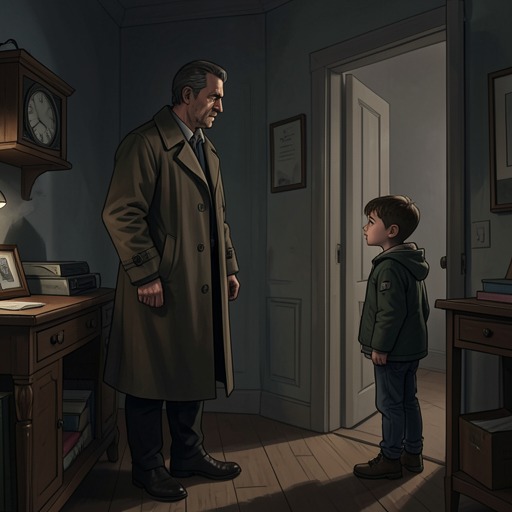
The small school formed part of a household governed by Oldie’s authority. At meals, Wee Wee sat beside his father and the two had separate food, while Oldie’s wife, three grown-up daughters, the usher, and the boys ate inferior meals in silence. Oldie’s wife might offer something like a reply; his daughters, dressed in the same shabby black summer and winter, rarely went beyond a nearly whispered assent or refusal. The remembered arrangement makes the school’s hierarchy visible not just in its sparse teaching but in the family and domestic life surrounding it.
Companionship Among the Boarders
Lewis’s account distinguishes the misery of the institution from the harm that pupils could inflict on one another. His brother had protected him during his first few terms, before leaving for Wyvern, but Lewis later doubted that this protection had been necessary. In the school’s final years, the boarders were few, badly treated, and joined by no new boys; their quarrels did not erase the familiarity formed by enduring the same conditions. Lewis believed this shared experience helped explain why Belsen ultimately did him relatively little harm: oppression from fellow pupils, he reflected, could wound a boy more deeply than oppression from above.
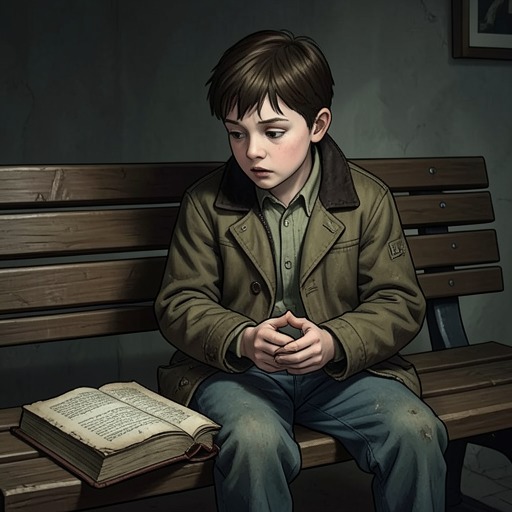
The five remaining boarders also found unstructured time together after organized games disappeared. On half-holidays they were sent out for walks, though they did little walking: they bought sweets in village shops, lingered by the canal, or sat at the brow of a railway cutting to watch trains emerge from a tunnel. Through these modest routines, Hertfordshire began to seem less hostile. Their talk retained the curiosity of children rather than narrowing to the interests Lewis associated with public-school boys. He remembered taking part in what may have been his first metaphysical argument, about whether the future resembled a line that could not yet be seen or one that had not yet been drawn. He no longer remembered which side he took, only the zeal with which he took it.
Memory and Significance
In retrospect, Belsen is neither reduced to its oppressive school nor redeemed by the boys’ companionship. Lewis recalls the canes, the weekly bath, the stalled Latin exercises, and the dwindling roll alongside canal-bank idleness, railway watching, and arguments about the nature of the future. The contrast explains the place’s mixed legacy: the institution offered little educational stimulation and an atmosphere of authority, yet the small group’s solidarity and shared curiosity helped soften its effects. The remembered setting’s final note is not a grand achievement but the gradual deepening of jokes between boys who had lived through the same years.